


 English
 Español
 Portugues
 Pусский
 Français
 Deutsch
 한국어
 Italiano
 Tiếng Việt


Evaluating the performance of Intelligent Selective Lift Storage requires comprehensive testing and validation based on three core dimensions: budget control, response speed, and system integration, combined with actual business loads. This is not only a technical selection issue, but also a long-term investment decision for warehouse operation efficiency.
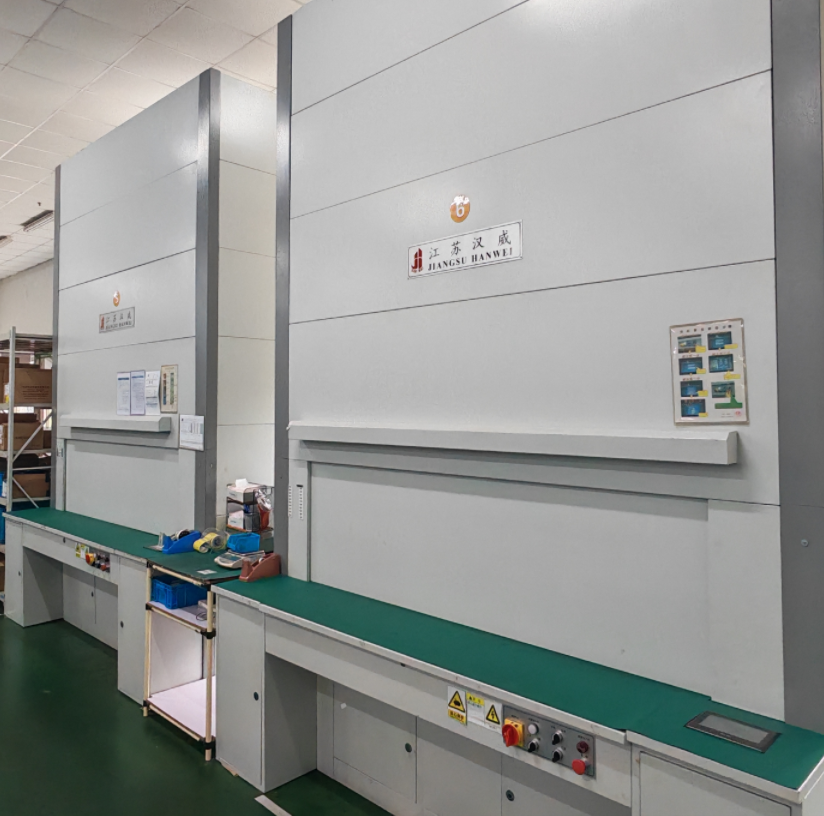
1、 Intelligent Selective Lift Storage Budget Assessment: Match development stages to avoid overinvestment or performance bottlenecks
The budget for Intelligent Selective Lift Storage should not only include procurement costs, but also the full cycle investment for deployment, operation, and expansion.
Initial investment: Small and micro enterprises can choose modular lifting cabinets (50000 to 200000 yuan), while medium and large enterprises need to consider integrated systems (over 200000 yuan)
Hidden costs: installation and debugging costs, training costs, interface development costs (such as WMS docking)
Key points of ROI calculation:
Labor saving: Comparing the picking time between "people looking for goods" and "goods to people"
Space benefits: Rent savings brought by increased storage density per unit area
Cost reduction of errors: after-sales and customer loss losses caused by incorrect or missed shipments
Suggestion: Prioritize systems that support phased expansion to reduce initial financial pressure
2、 Response speed: a core indicator for measuring system efficiency
The response speed of Intelligent Selective Lift Storage directly affects the ability to fulfill orders, especially in high concurrency scenarios.
Key indicator definition:
Task response time: The delay from the system issuing instructions to the elevator starting (ideal value<1 second)
Access cycle time: The total time required to complete a pickup and return (≤ 15 seconds for small systems and ≤ 3 seconds for large systems)
Throughput: The number of tasks that can be processed per unit time (e.g. ≥ 80 times/hour for moderate load)
Testing method:
Load testing: Simulate daily order peaks and observe whether the system responds stably
Stress test: Continuous high-frequency command input to detect whether the system will lag or lose tasks
Random Access Test: Simulate random access to multiple storage locations and evaluate the efficiency of scheduling algorithms
Tip: In actual testing, it is necessary to combine the distribution of real SKUs with the frequency of inbound and outbound shipments to avoid misleading empty load testing.
Phone: 86511-88898762
Fax: 86511-88697762
Mobile: +8613952813528 Manager Cai
Email: caiswt58@163.com
Address: 491 Changxiangdong Avenue, Dantu New District Industrial Park, Zhenjiang City, Jiangsu Province

Copyright © 2022Platform Information Technology Co., Ltd
サイトマップこの Web サイトでは、お客様に最高のエクスペリエンスを提供するために Cookie を使用しています。



 電話
コメント
(0)